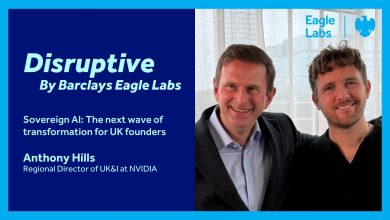
Sovereign AI: Scaling the UK’s AI Ecosystem
UK launches £500M Sovereign AI Fund as state lead investor, offering capital, supercomputer access (1M GPU hours), fast-tracked visas, data, and government contracts to build a competitive national AI ecosystem.

 For a decade, the gravity of Silicon Valley has felt inescapable.
AI founders have historically faced a binary choice: move to the Bay Area to access the necessary trifecta of massive capital, hyper-scale compute, and a concentrated talent pool, or risk stagnation.
But the traditional venture landscape is being disrupted by an unlikely new entrant—the nation-state. The United Kingdom has officially moved beyond the role of regulator to become a direct market participant.
With the launch of the Sovereign AI Fund, a £500 million vehicle, the British government is aggressively de-risking R&D and disrupting the traditional cap table.
Its mission statement is a direct challenge to the status quo: “The speed of venture, the strength of a nation.” By positioning the state as a lead investor, the UK is attempting to force a new reality for founders: start here, scale here, and win everywhere.
The “Unfair Advantage”: Vertical Integration of State Power
In an era of dry powder and mega-rounds, capital has become a commodity. As the fund’s leadership bluntly puts it: “Any serious VC can write a cheque.” To compete, the UK is offering what no private firm can—the vertical integration of state power.
The fund isn’t just matching market terms on its £1 million to £10 million cheques; it is offering a sovereign-level moat. While a Tier-1 VC offers a network, the UK government offers the ability to bridge the gap between innovation and legislation. This is the ultimate “unfair advantage.”
“The United Kingdom is your unfair advantage. Any serious VC can write a cheque. We match their terms and bring the unique powers of the British State.”
With $7.9 billion in existing AI venture funding already flowing through the ecosystem, the UK is not starting from zero. This fund is designed to act as a catalyst, using sovereign backing to accelerate a market that is already the third-largest AI ecosystem globally.
Compute as Currency: Beyond the “Cloud Credit” Trap
The most significant bottleneck for AI scaling isn’t just cash—it’s the “compute tax.” Traditional VCs often provide value-adds in the form of cloud credits for AWS or Azure. While helpful, these credits effectively act as a pass-through where the margin is captured by US-based Big Tech.
The Sovereign AI Fund breaks this cycle by treating compute as a primary currency. Portfolio companies receive fully funded access to the UK’s largest AI supercomputers, with an allocation of up to 1 million GPU hours per startup.
This is a strategic move in “Sovereign Compute.” By providing direct access to national infrastructure rather than third-party credits, the fund allows founders to execute intensive training cycles without burning their cash reserves on cloud provider margins. For deep tech founders, this isn’t just a perk; it’s a massive reduction in the cost of curiosity.
Regulatory Arbitrage: Policy as a Product Feature
In the global war for talent and data, the Sovereign AI Fund is weaponizing policy. By treating immigration and data access as “features” of the investment package, the UK is engaging in a form of institutional regulatory arbitrage.
- Fast-Tracked Talent: The fund provides portfolio companies with a direct line to world-class talent via fast-tracked visa programs. For a high-growth startup, the ability to bypass six months of bureaucratic hiring friction is a more valuable “value-add” than any board member’s Rolodex.
- Data and Distribution: Founders gain access to curated national datasets and the UK’s research base. Crucially, the state also acts as an “anchor customer,” offering a path to government awards and contracts worth up to £10 million.
This model effectively turns the state into a partner that can simultaneously fund the R&D, provide the labor, and then buy the finished product.
Compute Destiny: A 200-Year Momentum
This fund is a calculated attempt to reclaim a historical lineage of innovation. It frames the current AI race not as a new trend, but as the logical conclusion of a 200-year sequence of British compute leadership. This “Compute Destiny” moves from Ada Lovelace’s first algorithm in 1843 to Alan Turing’s birth of machine intelligence in 1939, through the invention of the World Wide Web in 1989, to DeepMind’s AlphaFold cracking the code of biology in 2020.
Today, the UK is the only £1 trillion tech market in Europe, home to over 180 unicorns and 5,800 AI companies. The Sovereign AI Fund is the mechanism to ensure the next “Transformer moment” stays within this ecosystem.
As Alex Kendall, CEO and founder of Wayve, observes: “This is exactly what our ecosystem needs to build on our startup success and create scaled-up, global AI champions.”
Conclusion: The New Sovereign Standard
The UK Sovereign AI Fund marks the end of the era where governments merely sat on the sidelines as regulators. By combining £500 million in capital with direct access to supercomputing, fast-tracked immigration, and national data assets, the UK is building a comprehensive state-sponsored moat around its tech sector.
For founders, the math of “starting here” has changed. As the race for AI supremacy accelerates, the “Sovereign VC” model is no longer a theoretical experiment—it is a current reality shifting the global competitive landscape. The question for the rest of the world is simple: will this become the new global standard for how nations protect their digital future?